











When should you change to summer tires?
The question returns every spring, and there is nothing surprising about that. Well-matched tires have a massive impact on safety, driving comfort, and vehicle behavior in various conditions. Although there is no statutory obligation in Poland to change tires, a sensible tire change is part of responsible vehicle operation. However, one needs to know when it is truly worth switching from winter to summer rubber and why changing tires too early or too late can worsen driving characteristics.
When is the best time to switch to summer tires?
The best time to change to summer tires is considered to be when the daytime temperature stays above 7°C for several consecutive days. That is precisely when winter tires start to lose their advantage, and summer tires better respond to spring and summer weather conditions. It is not just about the temperature at noon. What matters is the average daily temperature, mornings, evenings, and overall weather conditions. So, if the air temperature rises steadily and snow and frost become a thing of the past, it is usually the right time to visit a tire service.
Why do winter tires perform poorly in summer?
Winter tires are designed to operate at low temperatures. Their soft rubber compound performs better on snow and ice. While such soft rubber works well in the cold because it maintains grip, at higher temperatures it becomes overly susceptible to deformation. Driving on winter tires in summer means worse handling, higher rolling resistance, and faster wear. As a result, the vehicle may have a longer braking distance, especially on dry and hot asphalt. That is precisely why switching from winter tires to a summer version is not just a seasonal habit, but genuinely affects safety.



How are summer tires different?
On the other hand, summer tires are prepared to work at higher temperatures and in summer conditions. The hardness of the compound is higher here than in the case of winter tire types, and the summer tire tread is designed to provide better grip during dynamic driving on both dry and wet surfaces. In practice, summer tires ensure more precise handling, stability during braking, and often lower fuel consumption. This in turn translates into lower rolling resistance and more economical driving. Additionally, the summer tire tread and appropriate tread pattern work better with the road surface in the summer season, including wet roads during rainfall.
Summer, winter, or all-season tires?
Many people wonder whether it is worth changing tires when all-season tires and multi-season tires are also available. This is a convenient solution, but not always optimal. If you drive a lot, value confident handling, and care about optimal grip, classic seasonal tires remain a very good choice. Well-selected summer tires provide higher grip in warm months, and their construction improves the car’s traction properties. That is why drivers who want to maintain full control over their vehicle usually prefer to change tires according to the season.
What happens when you drive on winter tires for too long?
It is also worth remembering that driving on winter tires in spring and summer leads to faster tread wear. Winter tires operated on warm days lose their properties faster, and the tread wears down more intensely. This means that next winter, such tires may be less effective in real winter conditions. For comparison, summer tires fitted at the right time provide not only better handling, but also shorter braking distances on wet asphalt and dry roads. So if anyone is hesitating to change winter tires, the answer is usually: yes, as soon as the average daily temperature stabilizes.
What to pay attention to before changing tires?
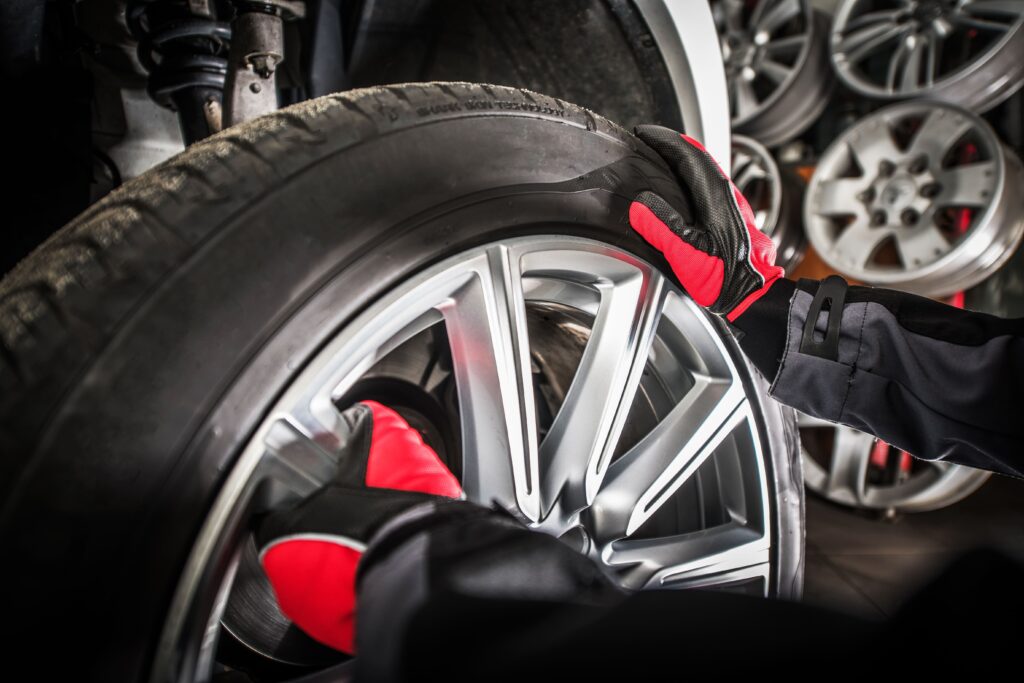
What else deserves special attention? In addition to temperature, the condition and tread depth are important. Even the best summer tires will not fulfill their role if the tread is too shallow or worn unevenly. During a service visit, it is worth inspecting the tires, as seasonal tire changes are a good opportunity to assess their condition. A specialist can also adjust the pressure to the current load of the car, which affects even wear of the tires. Such a seasonal change should also take into account driving style, mileage, and whether the vehicle is used mainly in the city or on long trips.
When to schedule a tire service appointment?
Timing is also important. At the turn of winter and spring, tire shops usually have the most work, so it is not worth leaving it to the last minute. A well-planned change to summer tires allows you to avoid queues and calmly prepare the car for the warmer months. If you are wondering how much tire replacement costs, remember that the service cost is small compared to how important well-matched tires are for safety. You can find more about the costs of changing from winter to summer tires in this article: How much does tire replacement cost?
Is it time to change tires?
Changing to summer tires should occur when the risk of frost disappears and the temperature stays above 7°C for several days. Then it is worth replacing winter tires with summer ones, as the vehicle will handle better in warm conditions. Good summer tires mean more effective braking, greater stability, and higher driving comfort. Therefore, instead of driving on tires unsuited to the season, it is better to change to summer tires early enough and prepare your car for a safe season!
See also: ROOKS vulcanization equipment
