Pneumatic Grinders – Precision and Efficiency in Your Workshop
Welcome to a place where professionalism meets reliability. If you’re looking for a tool that delivers precision, power, and efficiency, you’ve come to the right place. Pneumatic grinders are the key to effective and safe work in any workshop—from automotive and industrial settings to the hobbyist’s garage. We understand that choosing the right equipment is a decision that affects the quality of your projects. That’s why we’ve prepared a comprehensive guide to help you find the perfect pneumatic grinder tailored to your needs.
What types of pneumatic grinders are there, and what are they used for?
Choosing the right type of sander is the first step toward success. Each one is designed for specific tasks, and using them correctly guarantees perfect results. A pneumatic sander puts precision and power in your hands—discover the most popular types:
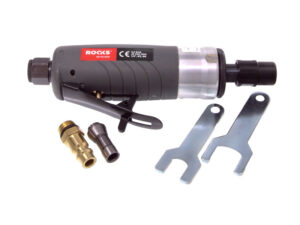
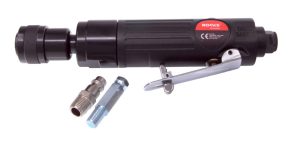
- Straight Air Grinders: Ideal for precise grinding, deburring, and polishing in hard-to-reach areas. Indispensable for working on welds or molds.
- Pneumatic angle grinders: Versatile and powerful. They’re great for cutting metal, removing rust, grinding large surfaces, and stripping old coatings. They’re a true workhorse in any workshop.
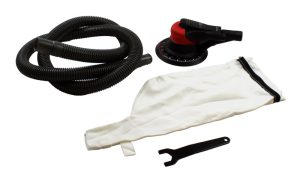
- Pneumatic eccentric sanders: Your tool for perfectly smooth surfaces. Thanks to the combination of rotational and oscillating motion, they minimize the risk of scratches, making them the perfect choice for preparing car bodies for painting.
- Pneumatic orbital sanders: Excellent for final sanding and surface finishing. They provide gentle sanding and a high gloss, especially on wood and metal.
How to Choose the Best Air Sander for Your Needs?
The maze of technical specifications can be overwhelming, but don’t worry—we’ll help you make sense of it. Focus on a few key aspects, and the choice will become simple.
- Power and RPM (revolutions per minute): These are the heart of your sander. The higher the values, the faster and more aggressive the grinding. For heavy-duty tasks, such as rust removal, choose high-power models. Lower RPMs are sufficient for precision finishing. Remember: The higher the power and speed, the greater the tool’s capabilities.
- Air consumption (L/min): Make sure your air compressor can supply the appropriate amount of compressed air. Check the compressor’s capacity and compare it to the grinder’s requirements to avoid power drops during operation.
- Disc/Shank Size: Choose the size based on the type of tasks you’ll be performing. Larger discs (e.g., 125 mm) are ideal for large, flat surfaces. Smaller ones work well in tight corners.
- Ergonomics and weight: The tool must fit comfortably in your hand. A lightweight, well-balanced design with a non-slip grip will ensure comfort even during hours of work and enhance your safety.
Frequently Asked Questions (FAQ)
We address the most common concerns so you can make a 100% informed choice.
Pneumatic or electric sander?
Pneumatic grinders are lighter, have a simpler design (which means fewer breakdowns), and are safer in environments with high humidity or dust. They’re also often more durable during intensive industrial use.
What kind of sander should you use to remove rust from a car chassis?
A powerful pneumatic angle grinder with a wire brush or flap disc will work best here. A straight grinder will come in handy for hard-to-reach areas.
Are ROOKS grinders a good choice?
Definitely yes. ROOKS tools, such as the OK-04.0051 and OK-04.0050 models, are highly regarded by professionals for their durability, excellent ergonomics, and great value for money. It’s an investment that pays off.
Accessories and Maintenance – How to Care for Your Air-Powered Sanders?
Your sander is an investment that will last for years—provided you take proper care of it. Proper maintenance is extremely simple and ensures the tool’s maximum service life.
- Essential accessories: Our product range includes everything you need: cutting and grinding discs, sandpaper, wire brushes, and specialized oils for pneumatic tools.
- Daily Maintenance: Before each use, add a few drops of oil to the air inlet. Regularly check and drain the moisture separator in the pneumatic system. These simple steps protect the motor from seizure and corrosion.
Common Problems and Solutions
Even the best equipment can sometimes cause trouble. Here’s how to deal with common problems:
- Loss of power: The most common cause is insufficient system pressure or leaky connections. Check the compressor settings and the tightness of the hoses. Also make sure the tool is properly oiled.
- Tool won’t start: Check that the valve is open and that air is reaching the tool. Sometimes, debris blocking the mechanism can be the problem—cleaning and lubricating it should help.
- Need help? If the problem is more serious, our service and technical support teams are here to assist you. We’ll help you get back to work quickly.
- Support – choose the ROOKS pneumatic sander that’s right for you
Support – choose the ROOKS pneumatic sander that’s right for you
Choosing an air-powered grinder is a decision that will affect the comfort and efficiency of your work. In our store, you’ll find only proven and reliable tools that meet the highest standards. We rely on the ROOKS brand because we know that its products—such as the versatile OK-04.0052 angle grinder or the precision OK-04.0051 straight grinder—guarantee your satisfaction.
Not sure which model is best for you? Contact our advisors! We’ll be happy to answer all your questions and help you choose a tool that will become your reliable partner in the workshop. Browse our selection and choose quality that pays off.