








Oil vs. Oil-Free Air Compressor
Are you facing the choice of your first or next air compressor and wondering which compressor to buy and which model will be better for you: an oil or oil-free compressor? This is a crucial decision that will affect the comfort, efficiency, and cost of your work. The choice is not obvious and depends on what exactly you need compressed air for. Are you planning heavy-duty work in the workshop or rather occasional DIY tasks in your home garage? In this article, we will guide you step-by-step through all the differences, pros, and cons of both solutions so you can make the best, informed decision regarding your compressor purchase.
The Fundamental Difference: Lubrication Method and Its Consequences
The core of the “oil vs. oil-free” dilemma lies in how an oil compressor works, specifically in how the compressor piston is operated. It is precisely this difference that defines the characteristics, intended use, and requirements of both types of equipment.
- An oil compressor uses oil to lubricate moving parts – the oil compressor piston operates in conditions where oil reduces friction, supports cooling, and extends the lifespan of the device. Such devices require oil lubrication and regular maintenance checks.
- An oil-free compressor works differently – the piston operates on materials with a low coefficient of friction, such as plastic rings or Teflon compounds. As a result, the oil-free compressor functions without the need for oil, which ensures high purity of compressed air.
This fundamental design difference translates into what distinguishes an oil compressor from an oil-free one and what applications they have.
Oil Compressor – Power and Durability for Professionals
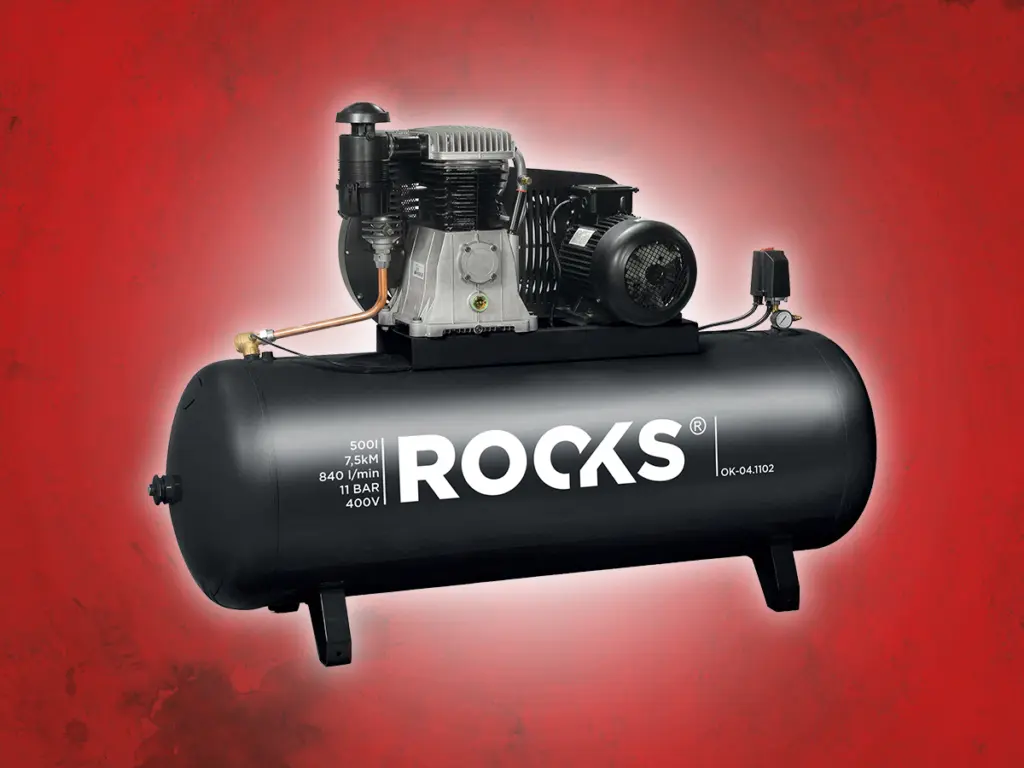
Oil compressors, often referred to as an oil compressor unit, have for years been the standard in auto repair shops, industrial plants, or anywhere continuous work and heavy-duty use matter.
Advantages of an Oil Compressor:
- Performance and durability: Thanks to oil lubrication and cooling, oil models ensure stable operation and resistance to heavy loads. This is an ideal solution for powering pneumatic tools, including impact wrenches, grinders, or other pneumatic equipment.
- Maintaining a stable temperature: Oil helps maintain a stable temperature, which protects internal components.
- Quieter operation: The presence of oil and lower friction mean that oil models often run quieter than oil-free units.
The disadvantages of an oil compressor stem from the presence of oil in the system:
- Requirement for regular maintenance – including oil changes, checking levels, and replacing filters.
- Possibility of oil particles entering the compressed air or the appearance of an oil-water condensate.
- Risk of contamination during tasks requiring clean air, e.g., painting walls, pressure painting, or powering paint spray guns.
Nevertheless, an oil compressor is ideal for applications where power, large tank capacity, and maximum operating pressure matter most.
ROOKS Products – Oil Compressors:
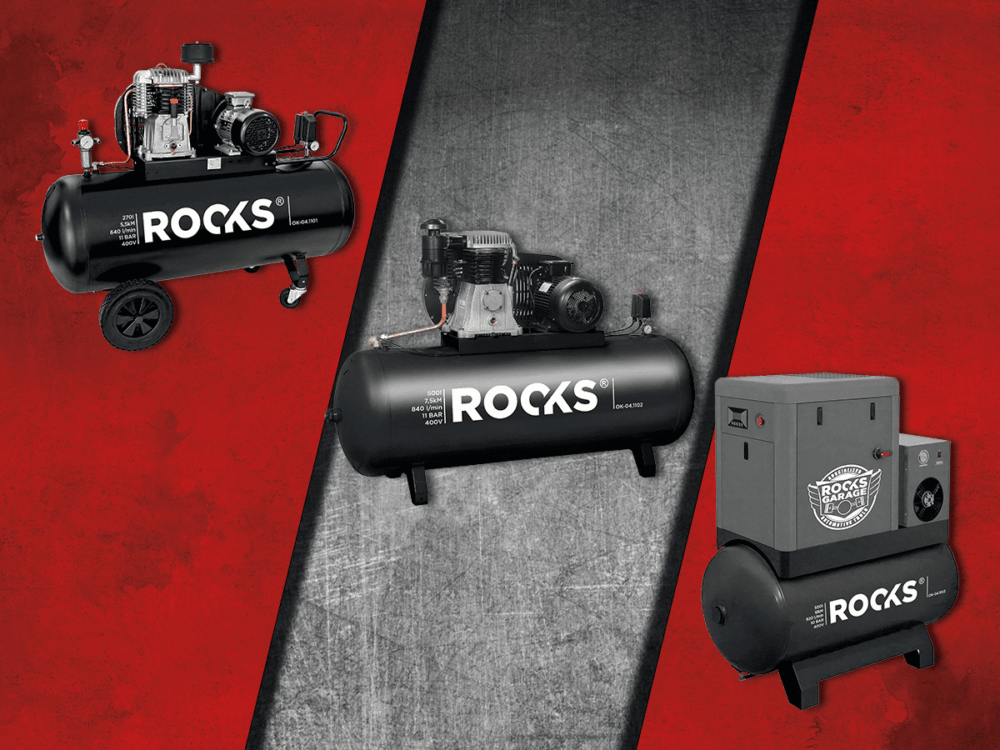
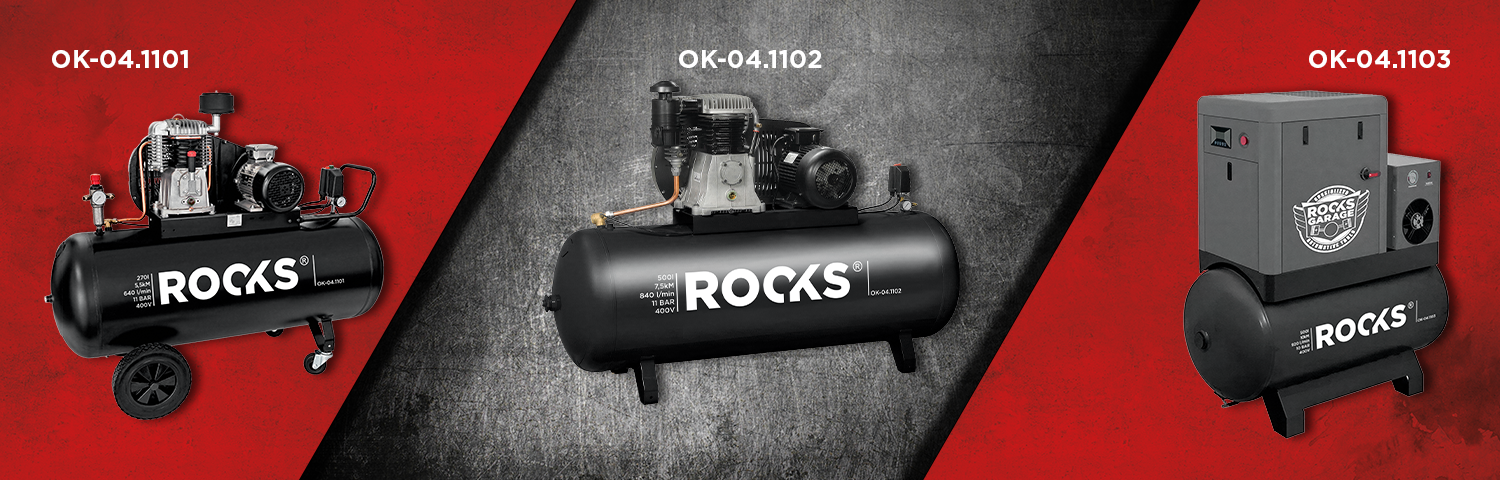
- ROOKS Two-Stage Piston Compressor 270 L, 5.5 HP, 640 l/min, 11 bar, 400 V
OK-04.1101 – durable and efficient equipment made of alloy steel and using the latest technologies.
- ROOKS Two-Stage Piston Compressor 500 L, 7.5 HP, 840 l/min, 11 bar, 400 V
OK-04.1102 – ideal for intensive work in professional workshops, delivering consistent performance over years of use.
Oil-Free Compressor – Purity and Convenience for Home and Special Tasks
An oil-free compressor, also known as an oil-free air compressor, is a device created for users who demand high air quality and minimal maintenance. Such an oil-free model is perfect for home use, the garage, as well as in industries where the purity of compressed air is crucial.
Advantages of an Oil-Free Compressor:
- No oil present: The air is free from contamination, while additional filtration systems and air filters further trap mechanical impurities. This is crucial when painting small structures, cleaning electronics, or carrying out tasks that require exceptional sterility.
- Low operating costs: No oil means no need for oil changes, and thus no issues caused by regular replacement and cleaning of complex components.
- Mobility: Lower weight and compact design make the oil-free compressor suitable for tasks such as tire inflation, blowing dust, hobby work, or powering tools with lower demand.
Disadvantages of an Oil-Free Compressor:
- Under heavy use, they may have a shorter lifespan than oil-lubricated models.
- They may generate more noise.
- Models with comparable output may consume more energy – this is a result of increased energy consumption when operating without oil.
In many cases, however, with an oil-free compressor, the home user gets the perfect balance of cleanliness, convenience, and mobility.
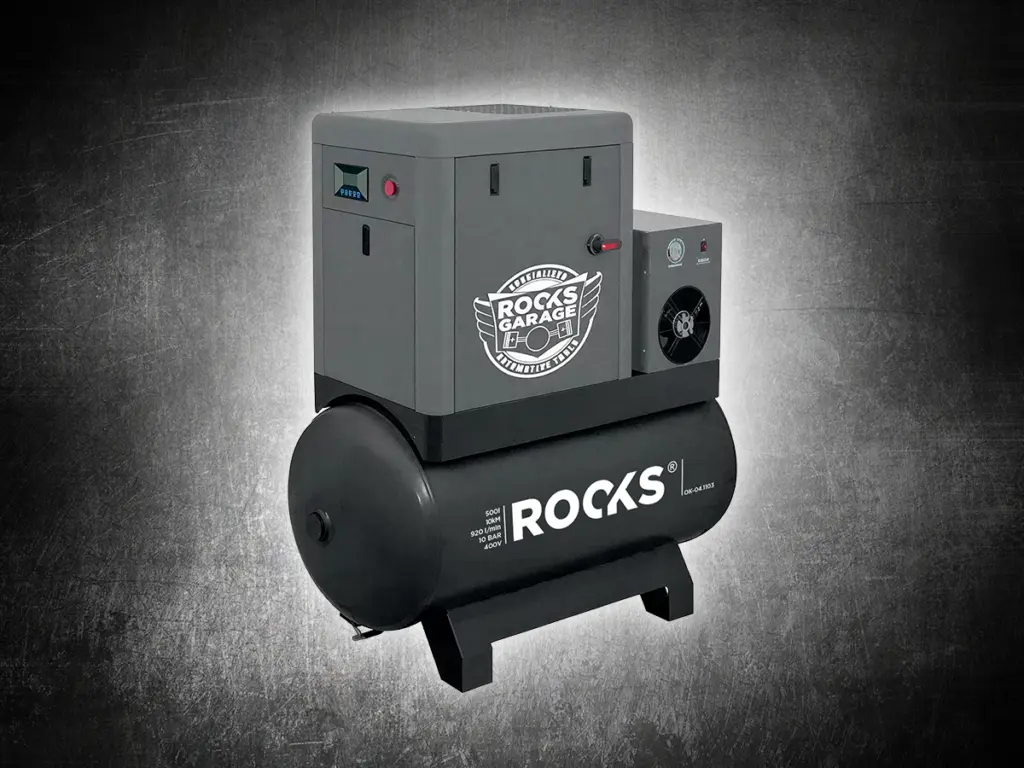
ROOKS Product – Oil-Free Screw Compressor:
- ROOKS Screw Compressor 500 L, 10 HP, 920 l/min, 10 bar, 400 V OK-04.1103 – guarantees high compressed air purity, long service life, and minimal maintenance thanks to the use of the best materials and innovative technologies.
Which Compressor to Choose? Our Recommendations
When choosing a compressor, it is worth analyzing your needs.
- For heavy-duty tasks and professional applications where power and reliability matter most – it is best to choose an oil-lubricated compressor. This is the ideal solution for continuous operation, where load resistance and stable performance are key.
- For household tasks, occasional jobs, or less demanding applications – the best choice is an oil-free compressor. It provides air purity, operational convenience, and mobility.
- For tasks requiring absolute purity, such as spray painting, precision pneumatics, or dentistry – the only solution is a device that ensures high compressed air purity, namely an oil-free compressor.
Additionally, before buying, pay attention to:
- tank capacity,
- maximum working pressure,
- filtration quality and the presence of check valves,
- filter type used – a clogged filter leads to pressure losses,
- noise level and intended use (domestic or professional).
ROOKS tools are an investment for years to come. Thanks to the use of the best materials, alloy steels, as well as modern technologies and innovations, both piston compressors and screw compressors ensure reliability, durability, and operational safety even in demanding conditions.
