



How to check the tightness of a car’s air conditioning system?
How to check the tightness of a car’s air conditioning system?
Efficient car air conditioning is not only about driving comfort in summer, but also better visibility, as the system helps dehumidify the air inside the vehicle. When cooling performance weakens, the risk increases that an air conditioning leak has developed. Then many drivers ask themselves one question: how to check car air conditioning leak tightness and when is professional servicing needed?
In practice, remember that everything in the air conditioning system must work together: compressor, lines, condenser, evaporator, valves, and seals. Even a minor leak leads to worse cooling performance, and over time, severe damage as well. Therefore, regular leak testing is essential if you want a fully functional car air conditioning system.
Why is air conditioning system tightness so important?
In the air conditioning system, refrigerant circulates along with an appropriate amount of oil that lubricates compressor components. If a leak occurs, the refrigerant and small amounts of oil begin to escape. As a result, pressure drops, efficiency deteriorates, and the car air conditioning stops working as it should.
Refrigerant loss is harmful to the environment and the atmosphere, and operating the vehicle becomes less economical, as a weak system can increase fuel consumption. If the air conditioning system is not tight, moisture can also enter, increasing the risk of corrosion and further breakdowns.
Symptoms of an air conditioning leak – what to look out for?
The most common symptoms of an air conditioning leak are quite easy to spot. The first sign is weaker cooling despite the AC being turned on. The second is a longer time required to cool the cabin and poorer response from the vents. The third symptom is unusual noises coming from the compressor.
It is also worth inspecting individual installation components. If oil stains appear on lines, around fittings, or on the compressor housing, this may indicate a leak. Such traces often occur at air conditioning connections, where seals work, as well as near components such as the condenser, radiator, or evaporator. That is why checking for leaks should not wait until cold air is completely gone, but at the very first signs of performance loss. Regular car air conditioning servicing allows for faster detection of potential leaks.
How to check air conditioning tightness yourself?
If you want to perform a preliminary check of air conditioning tightness, start with a visual inspection. Inspect lines, connections, and the area around the compressor and condenser. Look for dirty, greasy, or damp spots, as oil stains often point to leaks. However, it should be fairly noted that home inspections have limitations. Without proper knowledge, experience, and specialized equipment, small leaks are easy to miss.
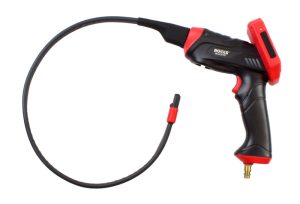
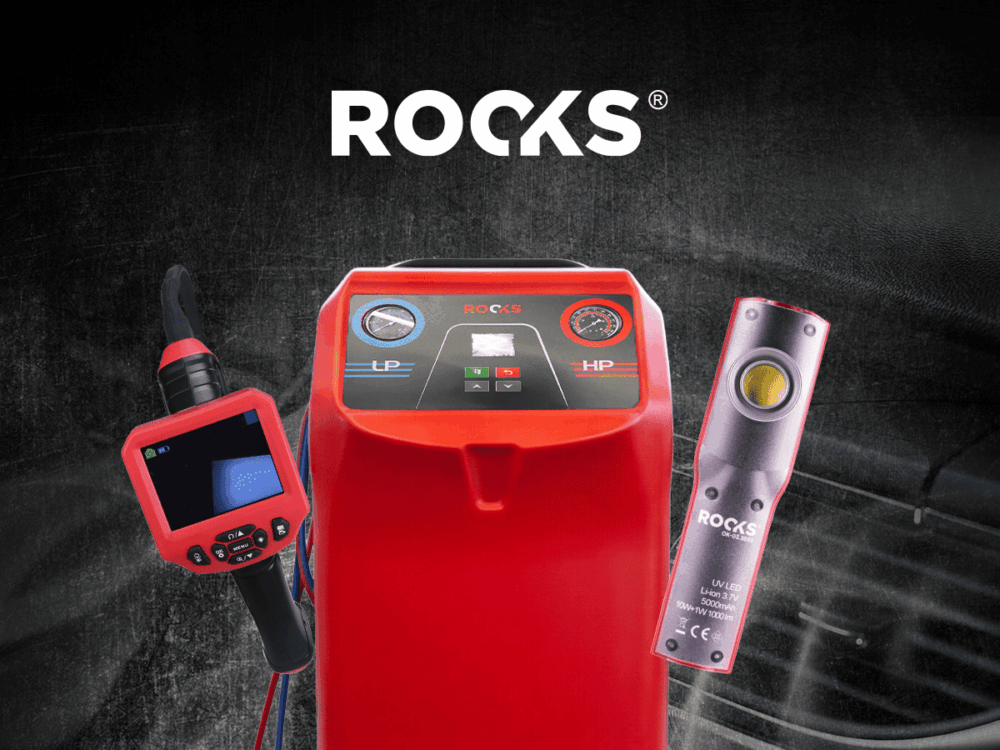
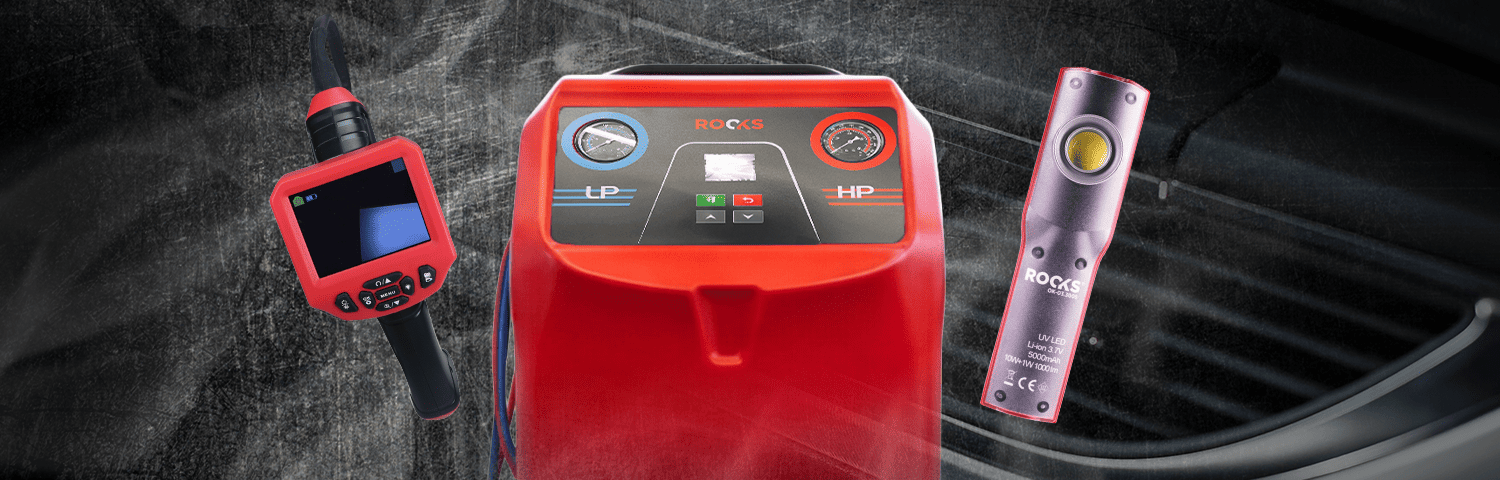
In practice, inspection tools are very helpful during initial AC checks. Here, the ROOKS Air conditioning cleaning inspection camera OK-03.0103 comes to the rescue, equipped with a 9 mm diameter head and a 0.8 m probe cable. This type of camera makes it easier to view hard-to-reach sections of the system, lines, and ducts where standard visual inspection is difficult. This makes it easier to spot dirt, moisture traces, or areas requiring closer inspection.
Professional leak testing methods
A workshop or service center has several ways to check tightness and confirm where a leak is located. One of the most common methods involves pressure testing using service stations and diagnostic tools such as pressure gauges. Such diagnostics allow evaluating whether leaks are the underlying issue in the air conditioning system.
Nitrogen pressure testing is also highly effective. In the case of an evacuated system, gas is injected under suitable pressure and any drops are monitored. This is a proven solution when checking air conditioning system tightness before restarting it.
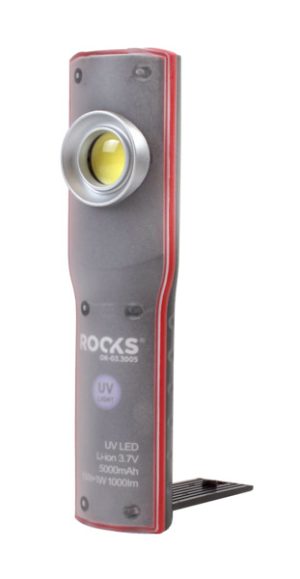
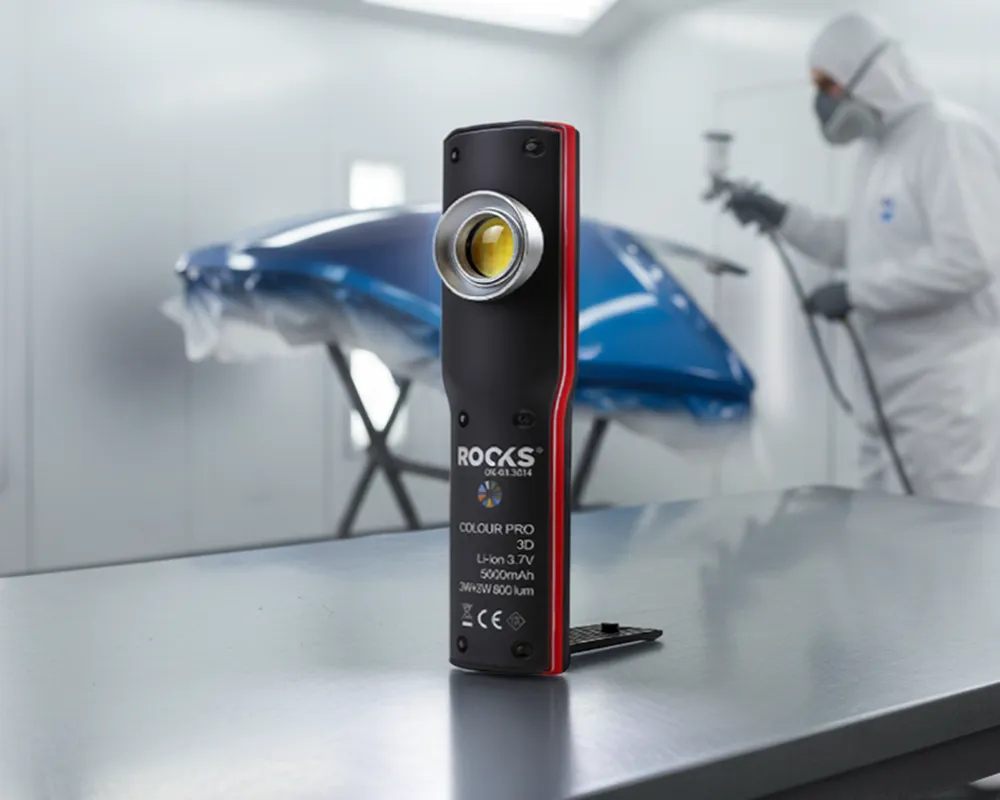
Another method is using UV dye. A small amount of dye is added to the system, and under ultraviolet light, technicians check where refrigerant and oil are escaping. When using the UV dye method, the ROOKS UV COB LED Inspection Lamp 10 W + UV 1000 lm OK-03.3005 serves as very practical support. The device combines a 1000 lm COB LED work light with an additional UV LED, making it ideal for locating spots where refrigerant and oil mixed with dye leak out.
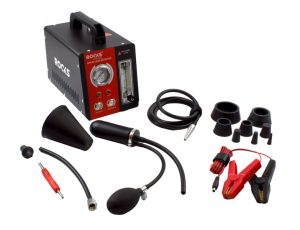
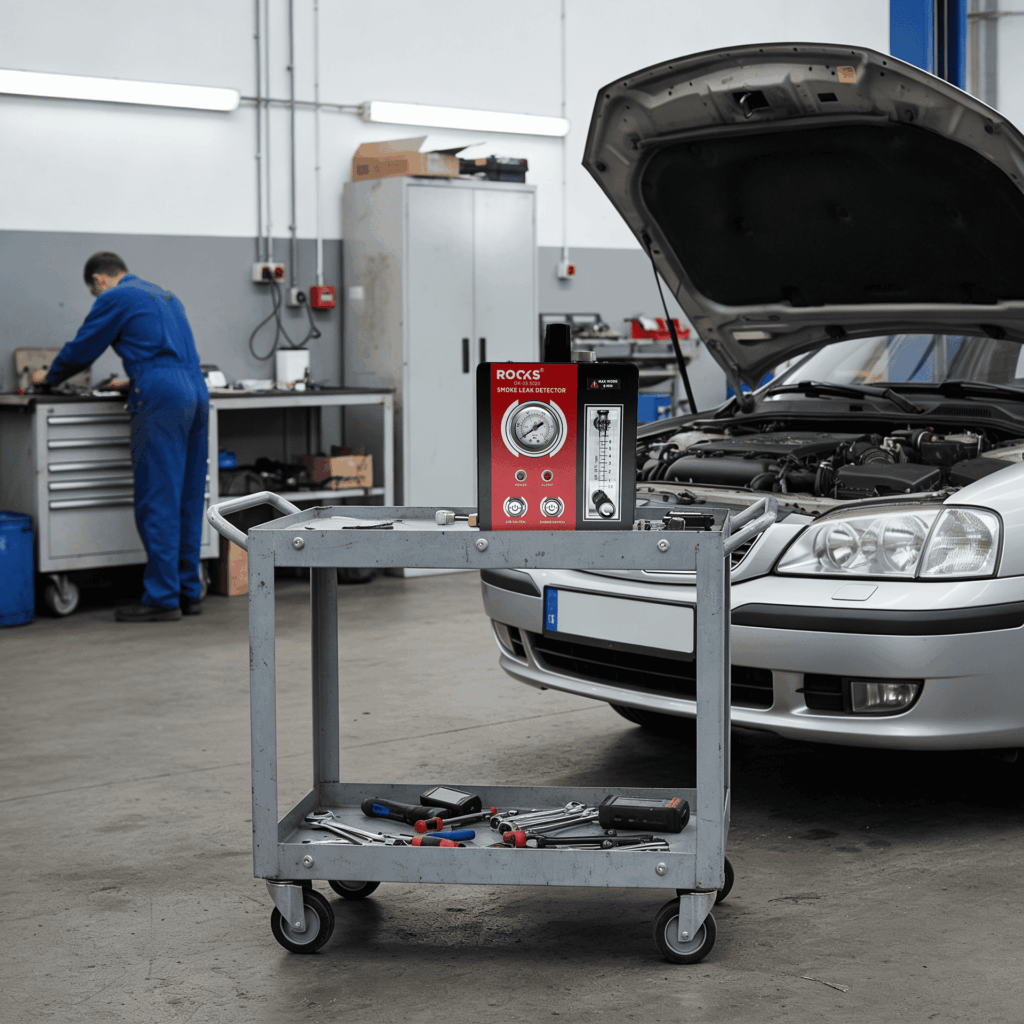
For leak detection, the ROOKS Smoke Generator for Leak Detection OK-03.5020 can also be very useful. This 12 V unit with 65 W power, 6 l/min output, and max pressure of 15 PSI is designed for quick leak detection across various systems, including air conditioning. In practice, a smoke generator makes it easier to pinpoint the exact location of even minor leaks in hoses, connections, and other installation parts.
When is servicing necessary?
If you suspect an air conditioning leak in your car, do not delay. The sooner you test the tightness of the air conditioning system, the lower the risk of severe component damage. After servicing, you can be sure of having a sealed system, correct pressure, and effective cooling.
Professional servicing is also necessary when recharging is required following repairs.
How to care for air conditioning tightness daily?
To maintain air conditioning tightness, turn on the air conditioning regularly, even in winter. This ensures that oil circulating in the system lubricates components and keeps seals from drying out. It is also worth inspecting parts such as lines, condenser, and evaporator, as mechanical damage to them often leads to failure.
Periodic checks at a workshop are also good practice. A specialist can assess system tightness, check component condition, and outline any repair work needed. For the customer, this means fewer surprises, lower costs, and confidence that car air conditioning will work efficiently.
ROOKS products useful in AC diagnostics
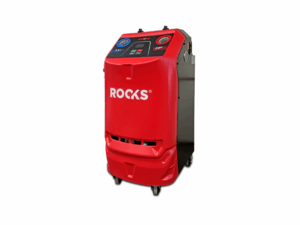
For professional service and diagnostics, it is worth looking at equipment that supports routine servicing as well as leak testing. A good example is the ROOKS Air Conditioning Service Station OK-08.3150 R134A, designed to work with R134a refrigerant. Equipment of this kind simplifies car AC system servicing, allows parameters to be monitored, and provides practical support.
In workshop practice, such a station assists not only in standard servicing, but also at the stage of verifying whether system tightness has been maintained. In practice, suitable service equipment allows for a better assessment of pressure in the air conditioning system and prepares the installation for further testing and potential repair.
For workshops and mobile service points, modern air conditioning service units streamline the entire diagnostic process. Thanks to them, it is easier to test AC system tightness, prepare the system for testing, inspect lines, connections, and individual components, and then safely perform further servicing. This is especially important when quick identification of fault causes, leak localization, and restoring full AC performance are required. Regular car air conditioning servicing allows for faster detection of potential leaks.
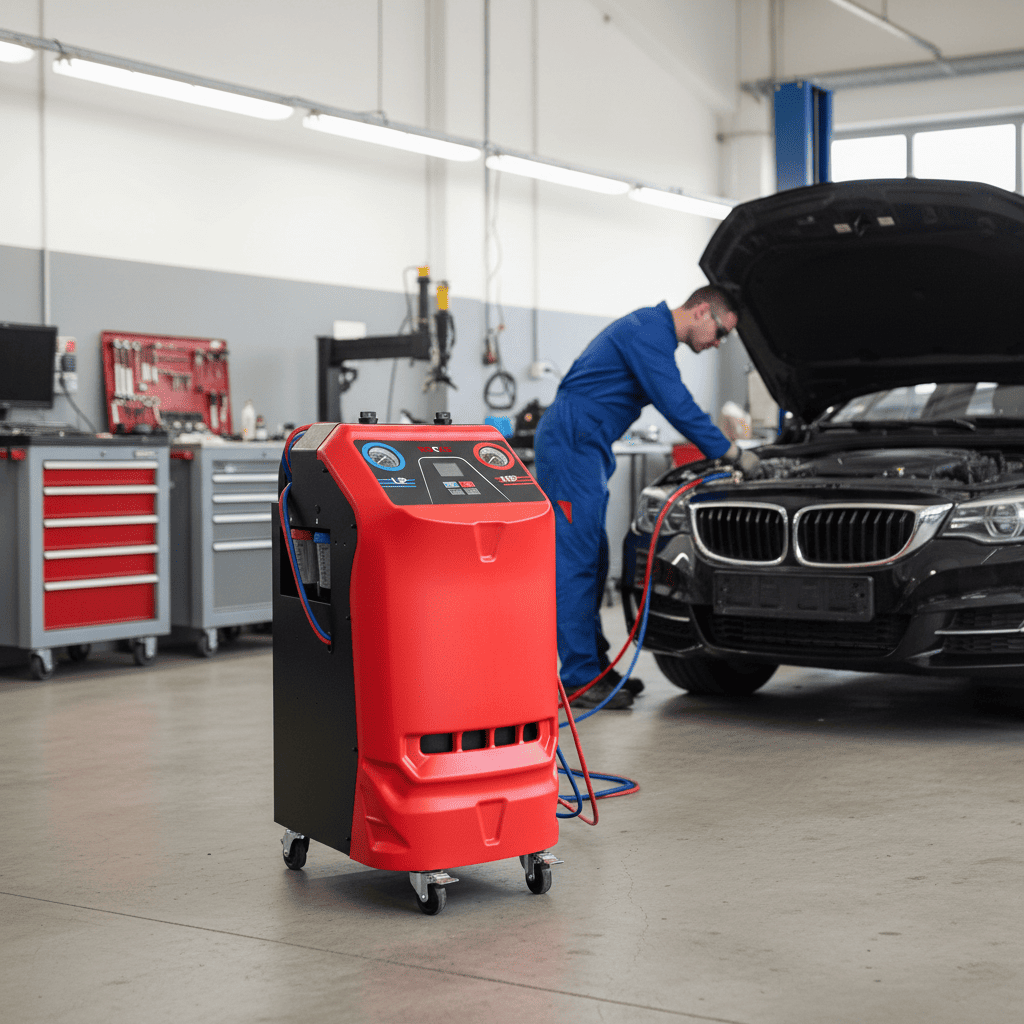
The ROOKS OK-08.3150 R134A unit fits the needs of workshops that want to efficiently service automotive air conditioning while ensuring high diagnostic quality. It is a useful solution wherever work convenience, operational precision, and professional customer service matter. Such technical backing helps effectively verify tightness, reduce the risk of further component damage, and ensure proper car air conditioning function.
How to check car air conditioning leak tightness?
To check car air conditioning leak tightness, you can start with a simple visual inspection, but a full evaluation usually requires professional service tools. A leaking air conditioning system shows clear signs, and the most effective diagnostic methods include nitrogen testing, UV dye inspection, pressure measurement, and electronic detector testing. Repair costs for a leaking AC system can be expensive, ranging from several hundred to several thousand PLN. If you want to effectively verify your air conditioning system’s tightness and avoid severe leaks, combining an initial self-assessment with a visit to a professional service shop is best.
- Bestseller
 ROOKS OK-03.3005 UV Inspection Light, COB LED, 10 W + UV, 1000 lmCatalog nr: OK-03.3005
Read more
 ROOKS OK-03.0103 Inspection Camera for Air-Conditioning Cleaning, 9 mm x 0.8 mCatalog nr: OK-03.0103
Read more