





How does a car’s air conditioning work?
Many drivers use it every day, but not everyone knows how car air conditioning actually works and why it can cool the air so effectively even during the hottest days. A fully functioning air conditioning system not only increases driving convenience, but also improves comfort for the driver and passengers, impacts visibility, and helps maintain better air quality inside the vehicle. Well-operating air conditioning in a car is standard today, yet its effectiveness depends on the cooperation of numerous components and regular maintenance. Therefore, it is worth knowing how car air conditioning works, what the most important system components are, and why neglecting air conditioning can lead to costly repairs.
How does air conditioning work?

Simply put, automotive air conditioning absorbs excess thermal energy from the cabin and transfers it outside. That is why, after switching on the air conditioning, the temperature inside the car drops noticeably, and the air becomes more pleasant. In practice, car air conditioning works because a special working fluid, namely the refrigerant, circulates in a closed loop and changes its state of matter. At times it exists as a gas, and at other times it transitions into a liquid state, with the entire air conditioning system utilizing these changes to cool the vehicle’s interior.
It is precisely this circulation and state changes of the refrigerant that explain how cooling works in a car. When the driver turns on the car’s air conditioning, the entire system begins operating as a closed circuit in which the working fluid continuously circulates between consecutive components. Its main task is to absorb heat from inside the cabin and release it outside the vehicle.
Design and key system components
To understand how air conditioning works, it helps to learn about the system’s design and layout. A typical air conditioning system consists of several main components: compressor, condenser, receiver-drier, hoses, expansion valve, evaporator, sensors, and control controls. These specific system elements ensure that automotive air conditioning cools, dehumidifies, and purifies the air entering the vehicle’s interior.
One of the key components is the air conditioning compressor. It draws in the gaseous refrigerant at low pressure and then compresses it, increasing both the refrigerant’s pressure and temperature. At this point, the gas moves into the high-pressure side of the air conditioning system. It is usually driven by the car engine. The efficiency of the compressor directly impacts how effectively the air conditioning performs.
Another important component is the air conditioning radiator, also known as the condenser, which is usually located at the front of the car where airflow aids cooling. Here, the hot refrigerant gives off heat to the outside air. As its temperature drops, it transitions from a gaseous state into a liquid state. Proper airflow is crucial here, which is why the radiator fan and operating conditions in high ambient temperatures play a significant role.
How does the refrigerant circulate?
The entire air conditioning system operates only when the refrigerant circulates correctly within the closed loop. After compression by the air conditioning compressor, it enters the condenser as a hot, high-pressure gas. Then, upon cooling, it turns into a liquid. Next, it flows through the receiver-drier and the expansion valve into the low-pressure side of the loop. The expansion valve is responsible for a sudden pressure drop, allowing the cooled refrigerant to enter the evaporator as a working fluid.
At this point, you can clearly see how car air conditioning works. Inside the evaporator, the liquid refrigerant begins to evaporate—transitioning into a gaseous state—while absorbing heat from the air passing over the evaporator’s surface. The air that subsequently enters the cabin is cooler, and air dehumidification occurs simultaneously, helping to remove moisture from the windows. That is why car air conditioning is useful not only in summer, but also in autumn and winter.
After leaving the evaporator, the refrigerant exists as a low-pressure gas and returns to the compressor. In this way, the air conditioning system completes a full cycle. The same working fluid circulates repeatedly, and cooling efficiency depends on parameters such as refrigerant pressure, system tightness, and the condition of individual components.
What happens when you turn on the air conditioning?
Upon switching on the air conditioning, the driver can adjust the air temperature, and in cars equipped with climate control, select automatic mode. In more advanced setups, the onboard computer analyzes conditions, selects fan speed, and works to reach the target temperature. In practice, this means the air conditioning system continuously responds to cabin conditions and adjusts its operation accordingly.
Air drawn from outside or via internal recirculation passes through the cabin filter and then reaches the air conditioning evaporator. There, it is cooled and dehumidified before the blower fan pushes it through the air vents into the cabin. As a result, automotive air conditioning not only cools, but also aids air dehumidification, reduces window fogging, and enhances travel comfort. That is precisely why well-functioning car air conditioning so significantly improves driving comfort.
Why is air conditioning maintenance so important?
Even if everything seems to be working, the air conditioning system requires regular inspection. Over time, refrigerant can leak out, and a low refrigerant level leads to reduced performance and poorer compressor lubrication, creating a direct path to compressor failure or seizure. That is why air conditioning servicing should include checking system tightness, refrigerant levels, compressor operation, and loop flow. In addition to topping up refrigerant, service stations draw a vacuum to remove moisture from the system and replace the oil responsible for lubricating the compressor.
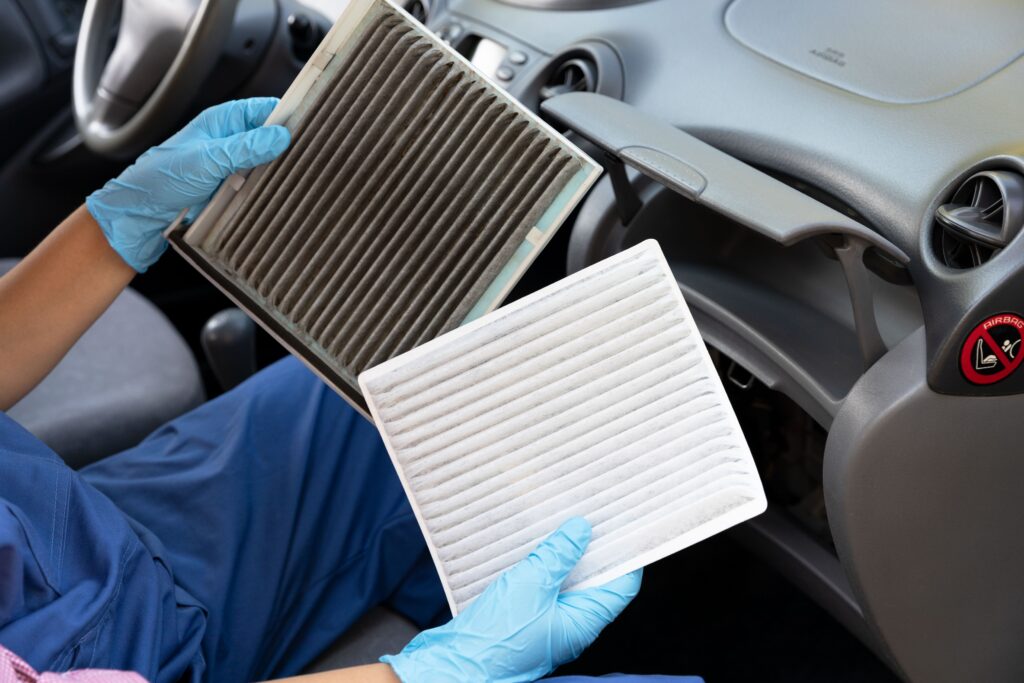
The cabin filter is also very important, as it directly affects dust levels and air quality inside the car. A worn-out filter can cause reduced airflow, excessive window fogging, moisture buildup, and unpleasant odors when the blower is turned on. It is also worth noting that air conditioning failure can stem from various causes: leaks, compressor wear, a dirty condenser, or a faulty expansion valve disrupting refrigerant flow.
How to care for your air conditioning?
To keep car air conditioning running smoothly over time, run it regularly, not just in the summer. This ensures the working fluid and oil circulate throughout the system, keeping the compressor properly lubricated. Regular inspection of air conditioning performance, replacing the cabin filter, and system disinfection help maintain proper operation across the entire system.
If you want to understand how air conditioning really works, remember one principle: it is a loop in which the refrigerant circulates, changing its temperature, pressure, and state of matter, and every component matters. When all parts are in working order, car air conditioning efficiently cools the cabin, supports air dehumidification, and improves driving conditions even during extreme heat. That is how air conditioning works—seemingly simple, but in reality relying on precise cooperation among all components in the automotive AC system.
What equipment supports air conditioning servicing?
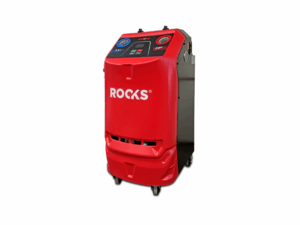
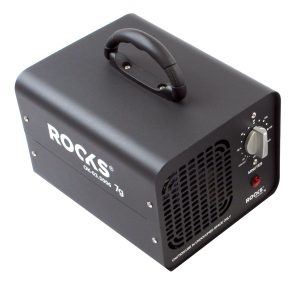
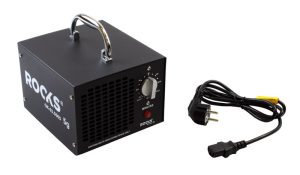
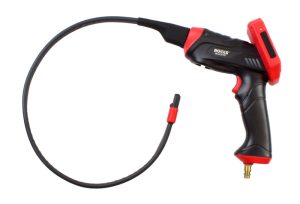
Regular air conditioning maintenance requires not only knowledge, but also proper tools. In workshop practice, the ROOKS Inspection Camera OK-03.0103 featuring a 9 mm head, 0.8 m cable, and IP67 protection rating is very useful during diagnostics and system cleaning, facilitating inspection of hard-to-reach places in the system and cleaning the evaporator. Following cleaning and servicing, refreshing the vehicle interior is another important step; for this purpose, the ROOKS Ozone Generator OK-03.5005 with an output of up to 5 g O₃/h is used to disinfect and eliminate unpleasant odors in cars. Meanwhile, complete servicing of R134a systems is supported by the ROOKS OK-08.3150 Service Station, which allows refrigerant recovery, vacuum creation, and system recharging—the fundamental procedures necessary for proper air conditioning function.
 ROOKS OK-03.0103 Inspection Camera for Air-Conditioning Cleaning, 9 mm x 0.8 mCatalog nr: OK-03.0103
Read more
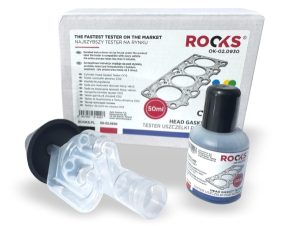
 ROOKS OK-02.0930 CO₂ detector for cylinder-head gasket leak testing, 50 mlCatalog nr: OK-02.0930
Read more
- Bestseller
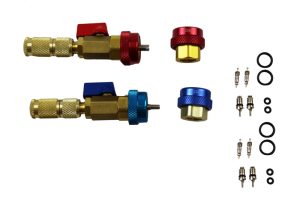
 ROOKS OK-02.0901 HP/LP air-conditioning valve replacement set for R1234yf and R134a refrigerantsCatalog nr: OK-02.0901
Read more