






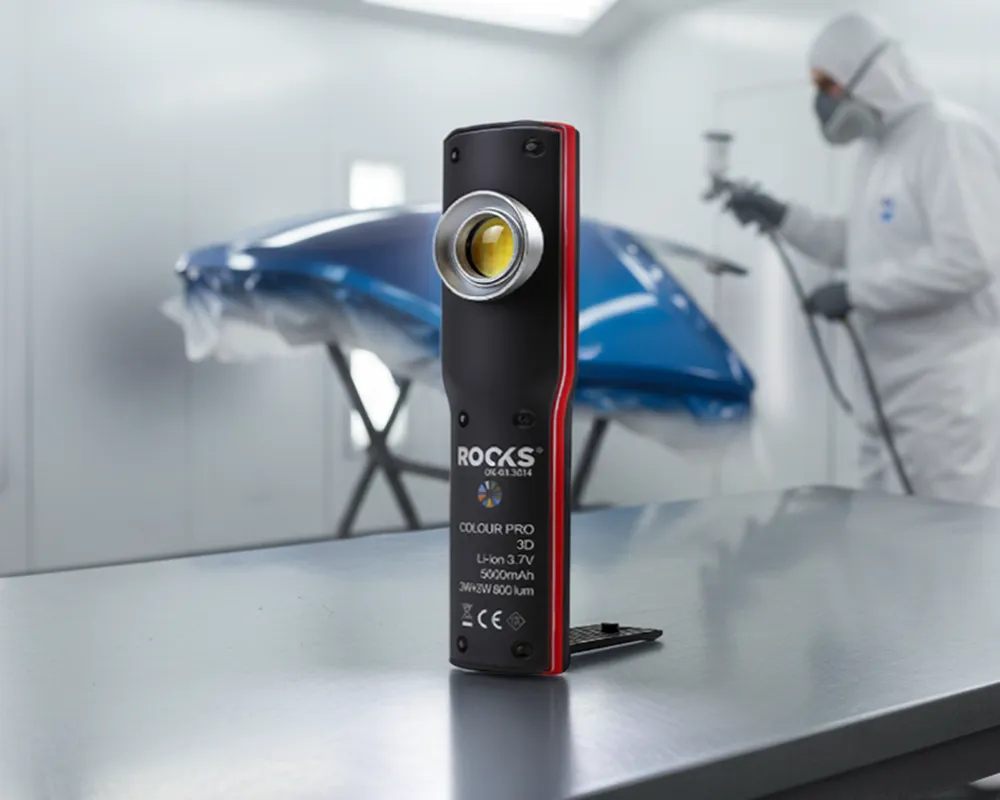




Selection and arrangement of lights in a garage
A garage is much more than just a spot to park your car. For many of us, the garage doubles as a workshop, a storage space, and sometimes even a personal retreat for pursuing passions. Regardless of how you use your home garage, one thing is certain – proper lighting placement in the garage is an absolute must.
Unfortunately, it is often treated as an afterthought, which leads to frustration, hinders precise work, and creates unnecessary risks. No more hunting for tools in dark corners or squinting while tinkering away! In this article, we will show you how to plan garage lighting, including lamp placement, and suggest a few ready-made setups that will transform your space.
Why is good garage lighting so important?
Before we get down to the specifics, it’s worth knowing why proper lighting in the garage is so crucial:
- Safety: Well-placed LED lamps and ceiling fixtures minimize the risk of tripping over objects or accidents while working with tools.
- Functionality: When carrying out precision tasks, optimal light intensity and the absence of harsh shadows are key. Workshop lights, directional lamps, or LED strip lights above the workbench deliver a powerful beam of light right where you need it most.
- Working comfort: Uniform lighting increases working comfort and improves concentration, while an appropriately chosen color temperature (neutral, approx. 4000 K) doesn’t strain the eyes. What light color is best? We delve deeper into this topic in a separate article.
- Aesthetics: Well-planned lighting placement and modern garage LED lights completely transform the space, creating a bright, tidy, and visually appealing workshop.
Which lights to choose for a garage?
LED lighting is the obvious choice – energy-efficient, durable, and resistant to varying temperatures and shocks. LED lights for the garage consume up to 80% less energy than traditional light sources or halogen bulbs, while offering a long lifespan and generating minimal heat. Energy efficiency is a key advantage, especially if you plan on spending many hours in your garage.
Types of garage lights:
- LED ceiling lights (flush mounts) – the main light source and general lighting, providing high visibility and even light distribution across the entire space.
- LED panels and linear batten lights – bright, focused light over the workbench, countertop, or near shelving units, ensuring precise work.
- Directional lights (spotlights) – for targeted illumination of areas requiring extra focus, allowing you to set the beam angle exactly where you need it.
- LED strips and LED channels – ideal for illuminating dark corners of the garage and shelves, improving visibility in tool storage areas.
- LED floodlights with motion sensors – allow for automatic light activation when driving in or near the parking space, boosting safety.
- Vapor-tight fixtures (high IP rating) – protect against dust, moisture, and mechanical damage.
Planning lighting right at the garage construction stage
The best time to think about choosing garage lighting is during its construction phase. Even at the design stage, you can select the optimal number of light points, plan the placement of lamps and switches, and properly prepare the electrical installation. Such lighting planning helps avoid later renovations while ensuring safety and operational comfort. Thanks to well-thought-out light positioning, every zone in the garage will be clearly visible – it is a matter of visibility that makes parking your car easier and allows you to comfortably use your workbench or storage shelving.
Scenario 1: Single-car garage
It is worth remembering that garage lighting depends largely on what the garage is used for. If it serves as a typical space for parking a car, good general lighting and a few light points over the parking spot will be sufficient.
- Main lighting: 1–2 neutral white LED ceiling lights
- Luminous flux: 4000–6000 lumens – ideal for illuminating the entire area
- Optional: LED floodlight with a motion sensor above the garage door for automatic turn-on
Such basic lighting in the garage ensures good visibility, eliminates dark spots, and allows for comfortable use of the garage space.

Scenario 2: Garage with a workshop
If the garage functions as a workshop, you need to ensure task lighting over the workbench, LED strips in dark corners, and spotlights for precision tasks.
- General lighting: 2–3 LED batten lights or ceiling panels
- Task lighting: additional LED light over the workbench, under-hood work light, flashlight for spot lighting
- Proper light intensity: 500–700 lux in the work area
Such a solution makes workshop tasks a pleasure – uniform lighting throughout the garage and no shadows help ensure safety.

Scenario 3: Garage as a space for DIY, passions, and relaxation
- Main light source: ceiling lamps or LED panels
- Spot lighting: placement of light points in key areas where work will be carried out
- LED strips: illumination of recesses, shelves, and contours for a visual effect
- Color temperature: neutral white for work zones (4000 K), warmer for relaxation areas (approx. 3000 K)

Summary
Ideal garage lighting is lighting that increases work efficiency, eliminates dark areas, and ensures visibility throughout the entire space. It is important to match the number of lights, their output in lumens, and the appropriate color temperature so that the light supports concentration and working comfort. It is also worth paying attention to the ingress protection (IP) rating of the fixtures and using energy-efficient light sources, which enhances the system’s energy efficiency. As a result, your garage becomes a functional, safe, and pleasant space for both DIY projects and everyday use.
Check out our offer of workshop lights and choose ROOKS garage lighting!
 ROOKS OK-03.4405 20V AQ-ONE LED work light, 1000 lm, set with 2 Ah batteryCatalog nr: OK-03.4405
Read more
 ROOKS B1 FLEX SLIM Work Light OK-03.3105, 1000 / 200 lm, 2600 mAh, 360°Catalog nr: OK-03.3105
Read more


