











Is tire change mandatory?
Many drivers wonder every year whether changing tires in Poland is required by law. The answer is simple: currently, there is no statute that mandates changing to winter tires by a specific deadline. However, this does not mean that changing tires before the season is unnecessary. Well-selected winter tires significantly improve driving safety and provide better grip, especially under harsh winter conditions.
What do the law and practice say?
In Poland, drivers have no statutory obligation for seasonal tire changes in specific months, but they are required to maintain their car in a condition that ensures the safety of all road users. Although the obligation to change tires is not written into Polish law, the driver should use appropriate tires adapted to the season and prevailing weather conditions. In the event of a roadside inspection, if the tires are extremely worn or do not provide adequate grip, police officers can, in extreme cases, even seize the vehicle’s registration certificate.
Why choose winter tires?
Modern winter tires feature a special rubber compound that retains flexibility at low temperatures. Thanks to this special rubber compound and suitable tread design, the vehicle handles snow and slush much better. Winter tires improve handling in winter conditions and help maintain control over the car when braking and accelerating. Good winter tires can provide a shorter braking distance, which is why fitting them is strongly recommended wherever difficult road conditions appear.
When is the best time to switch to winter tires?
In practice, deciding when to put on winter tires should not depend on a calendar date, but rather on the average daily temperature and a realistic assessment of the road situation. When it drops to around 7°C, changing tires becomes a sensible step. Many people plan tire changes in advance to avoid waiting until it becomes an urgent necessity.
Summer tires in winter mean higher risk
It is worth remembering that summer tires are not adapted for driving on snow and slush. Driving on summer tires in winter increases the risk of skidding and extends the car’s stopping distance. Conversely, winter tires perform better in winter conditions, making seasonal tire replacement simply a sensible decision. For many drivers, tire changes are a regular part of caring for their vehicle and their own safety, especially when sudden changes in road conditions occur.

Can driving without winter tires have consequences?
Although there is no formal mandatory tire change requirement in Poland, inappropriate tires can be recognized as one of the causes in the event of a collision or accident. In some situations, this can even result in a fine if the condition of the vehicle threatens road traffic safety. The insurer may also attempt to refuse payout of compensation if they prove gross negligence and a failure to adapt the vehicle to road conditions. Proper tire selection is especially important during heavy rainfall and poor weather conditions.
How does this look in other European countries?
In many countries, the topic looks different than in Poland. A number of European states have regulations mandating the fitment of winter tires during specific months or under specific conditions. In some European Union countries, a specific date matters, while in others, the weather dictates the requirement. Therefore, before driving abroad, it is worth checking local rules, as using winter tires is required by many European countries. This is particularly important when planning to travel through several countries on a single route.
All-season tires or winter tires?
Some drivers choose all-season tires, but they are not always as effective as winter tires during harsh winters. If the vehicle frequently travels on intercity routes, classic winter tires may be the better choice. Well-matched winter tires offer greater driving comfort and better grip when weather conditions change quickly. In such situations, switching to winter tires should not be postponed, as the realities of driving require winter tires.
When is it worth switching back to summer tires?
Just as it is worth opting for appropriate tires in winter, summer tires are a better choice than a winter set in warmer months. At higher temperatures, their compound works optimally, resulting in more stable handling and reliable driving precision. Additionally, driving on winter tires in summer is beneficial neither for comfort nor for tire durability, as the winter compound wears down much faster. That is why seasonal tire changes should work both ways — fitting winter tires in the autumn and returning to summer tires in the spring, matching the tires to current weather conditions.
Tread condition matters as well
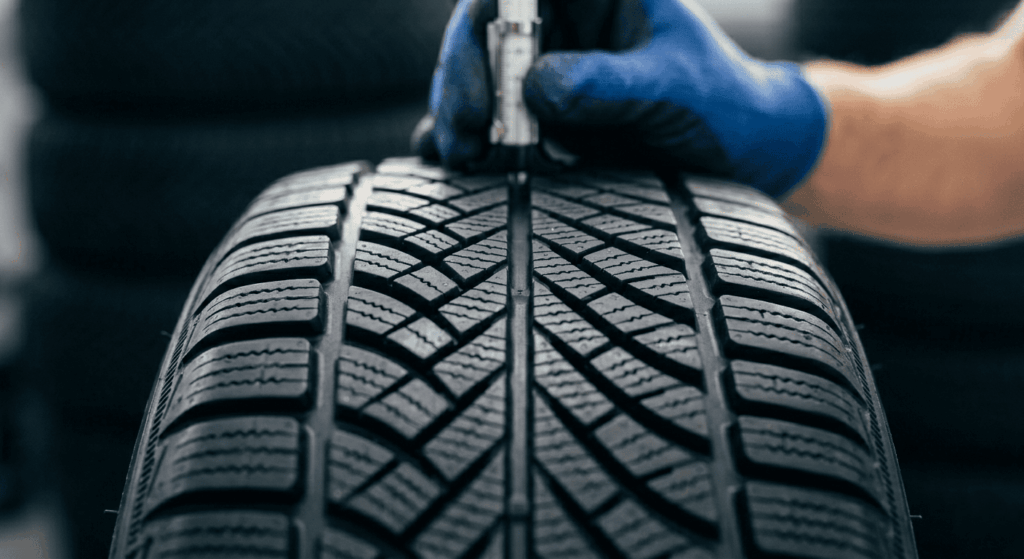
It is not only the tire change itself that matters, but also their wear. The minimum allowable tread depth is 1.6 mm, but in practice, using winter tires with deeper tread is significantly safer. This is especially important for daily driving on winter tires and when driving in low temperatures. Even the best tires will not fulfill their role if the tread is worn out — they will not provide adequate traction and grip on slippery surfaces.
Is it worth changing tires despite no legal obligation?
Although mandatory tire changes and winter tire mandates do not exist in Polish regulations today, seasonal tire changes are a sensible choice. In the world of seasonal tires, matching the weather conditions is what matters most. That is why many drivers regularly change to winter tires, plan it in advance, and treat winter tires as a real boost to safety. In practice, using winter tires is dictated not by law, but by common sense. It is also important to remember that during a post-incident claim dispute, the insurer may attempt to refuse compensation if the condition of the tires was clearly unsuited to road conditions. If you care about confident handling, all-season tires will not always be as effective as good winter tires.
Check out: essential ROOKS vulcanization equipment
